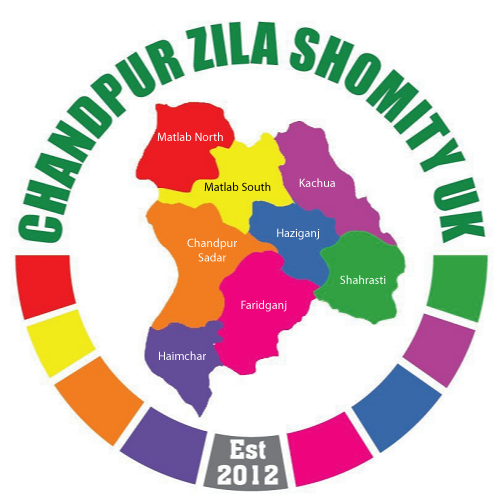
 CZS UK

Welcome to Chandpur Zila Shomity UK
We are thrilled to have you join our community. Whether you're a new member, partner, or visitor, we extend our warmest greetings and invite you to explore all that Chandpur Zila Shomity UK has to offer. Together, let's embark on a journey of growth, collaboration, and innovation.
Chandpur District is located in the Chittagong Division of Bangladesh. It's known for its scenic beauty, rivers, and agricultural lands. The district has historical significance and is home to various cultural landmarks. If you need more specific information, feel free to ask!
During the period of imperialism, Chandpur, like many other regions in Bangladesh, was under British colonial rule. The British Empire established administrative control over the area, exploiting its resources and using it for trade and commerce. Chandpur likely saw the introduction of British administrative systems, infrastructure development such as railways and roads, and changes in the socio-economic structure due to colonial policies. The local population would have been subjected to various forms of oppression and exploitation, including land taxation and forced labor. Additionally, Chandpur might have played a role in the British colonial economy through the production of agricultural goods and raw materials.
The people of Chandpur, like many other regions in Bangladesh, have migrated to the United Kingdom over the years for various reasons, including economic opportunities, education, and family reunification. In the UK, they have formed communities, particularly in cities like London, Birmingham, and Manchester.
These Chandpuris in the UK often maintain connections with their homeland through cultural events, religious gatherings, and community organizations. They contribute to the multicultural fabric of British society while also preserving their own cultural heritage.
The exact number of Chandpuris living in the UK is not readily available, but they are part of the larger Bangladeshi diaspora in the country, which is estimated to be in the hundreds of thousands.
Chandpur, a district in Bangladesh, had various contributions during the British colonial period. It was part of British India until 1947. Its contributions ranged from being a center of trade and commerce, particularly in jute, to playing a role in the socio-political movements of the time, such as the Indian independence movement. Additionally, Chandpur served as a hub for transportation and communication due to its strategic location along the Meghna River, facilitating trade and British administrative activities in the region.
The name "Chandpur" is derived from the combination of two words: "Chand" and "Pur". "Chand" is believed to refer to the moon in Bengali, and "pur" means town or city. Therefore, Chandpur roughly translates to "Town of the Moon" or "City of the Moon." This name might have origins in local mythology or historical significance related to the lunar calendar or natural features of the area.
During the Mughal period in South Asia, Chandpur was part of the Bengal Subah, which was one of the major administrative divisions of the Mughal Empire. The Mughals exerted control over the region through their appointed governors and administrators. Chandpur, situated along the banks of the Meghna River, likely served as a strategic location for trade and transportation during the Mughal era. While specific details about Chandpur's relationship with the Mughals might not be extensively documented, it would have been subject to the broader governance and policies of the Mughal administration in Bengal.
Welcome aboard!